Rapid urbanization across Southeast Asia is reshaping landscapes—and biodiversity is under pressure. The new IUCN discussion paper, Building Urban Ecological Networks for Conservation in the ASEAN Region, calls for a bold response: creating integrated networks of urban protected areas, OECMs (Other Effective Area-Based Conservation Measures), and green and blue spaces to reconnect fragmented habitats.
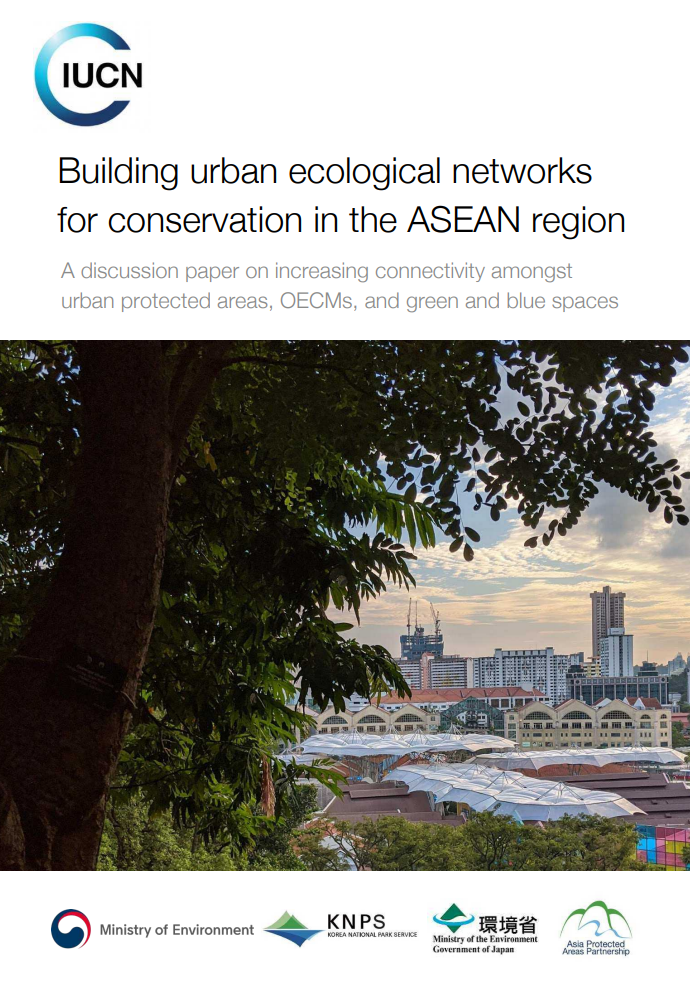
Building Urban Ecological Networks for Conservation in the ASEAN Region
Anchored in the Kunming-Montreal Global Biodiversity Framework, the report outlines a practical framework for cities to:
- Enhance ecological connectivity through corridors and multifunctional green spaces.
- Align with global and regional policy goals, including the 30×30 target.
- Engage communities via citizen science and inclusive governance.
- Mobilize financing through partnerships and innovative mechanisms.
Case studies from across ASEAN illustrate how cities can transform degraded areas into thriving habitats, improve climate resilience, and deliver health and well-being benefits for urban residents.
Urban ecological networks are not just conservation tools—they are essential for building resilient, livable cities.
Explore the full report here.